Your Buyer Lives in an Ecosystem. Sell to That First
Nine master students, a Thai festival stall, and the feeling that sells before any product does.
Picture one of the students at a market stall, pitching a product they had first laid eyes on that very morning, in a language that isn't theirs, to people who grew up with it and know it better than they ever could.
They have facts, freshly learned. The listeners are polite, and completely unmoved. Every fact lands and slides off, because you cannot tell people something new about their own childhood. There's a whole ocean between the two sides of that stall, and it isn't made of water.
What happens next is the reason we're writing this.
9 visitors and 1 question
A few weeks ago, nine master students from La Réunion Island flew into Bangkok to study marketing. That was the plan on paper. The question we actually built their day around was different, and we never wrote it on any slide: can you make someone feel, in one afternoon, the thing our whole company is named after?
“Sabai”. Say it slowly and it doesn't sound like a business word. It sounds like exhaling. Like the moment you put something down that you didn't realize you were carrying. It's one of the most ordinary words in Thai, ease, comfort, the absence of weight that shouldn't be there in the first place, and it's the word sitting inside our name: Datasabai. We didn't pick it because it sounds nice. It's a promise about what work should feel like when it's done right.
Curious where that name began? Read the founder's story: https://www.datasabai.com/en/resources/blogs/founder-spotlight
The trouble with a word like that is you can't teach it. Explaining ease is like explaining swimming from the shore. At some point, someone has to get in the water.
Getting them in the water
Their day in Bangkok was older than their plane tickets. For a month before they landed, it had been quietly taking shape in calls and messages across an ocean, and every conversation kept circling back to the same question: a year from now, what would these nine students still be carrying with them?
So instead of a lecture, we built a workshop: a Thai festival, brought to life indoors. Stalls, teams, prizes, and one simple job: sell.
The first round handed every team a Thai product. Things the students had never heard of before that morning, pitched to judges who had known them all their lives. The second round reversed the current: products from La Réunion, pitched to people who had never once tasted them.
Two rounds, and the same wall in both, just turned around. First they were strangers to the product. Then the product was a stranger to everyone listening.
The ocean isn't made of water
That was the quiet genius of the day, and it wasn't ours alone: it was built with their professor across a month of planning. There was no round where knowledge alone could win. Knowing the product by heart didn't help when the room didn't. Learning the facts fast didn't help when the room knew them better than you.
You could watch teams work through it in real time. Explaining came first, it always does: what it is, where it comes from. All true, and none of it moved anyone. Then reasons: what you could do with it, when you'd use it. Closer, but a reason handed to someone is still your reason, not theirs.
And then, pitch by pitch, something let go. They stopped presenting the product and started sharing what it felt like: the first taste of something you can't place, the music that pulls a memory out of a stranger. And the faces changed, on both sides of the stall, at the same time.
The product hadn't changed. The facts hadn't changed. The feeling had simply arrived first, and the product followed it in. That feeling needs no translation, even when the product does.
It wasn't a trick, and it isn't one in boardrooms either. People decide with feeling first, everywhere, and collect the reasons afterward, mostly to explain a choice that has already been made. The teams that landed their pitch that day didn't win on knowledge. They won on reading the people in front of them.
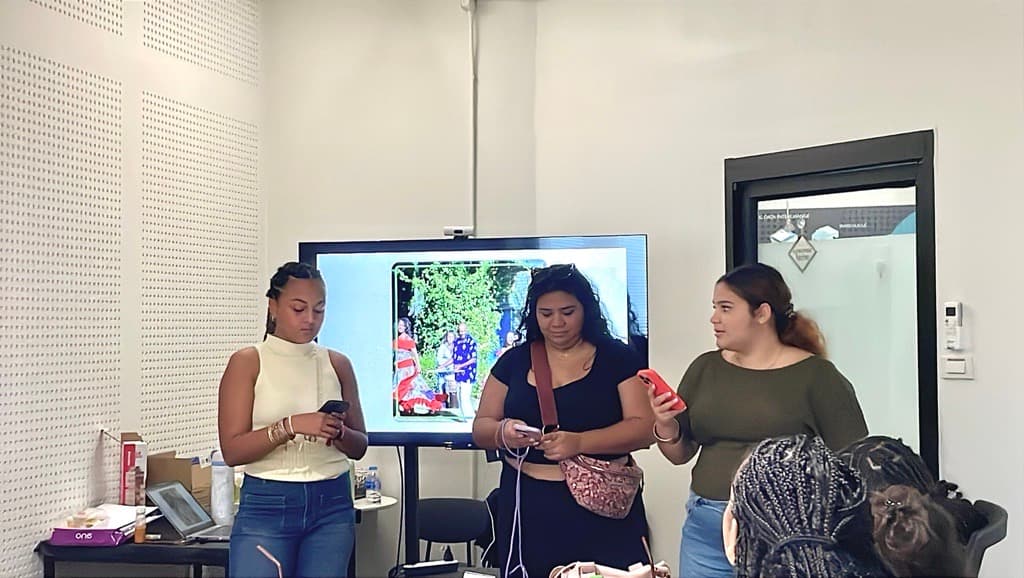
What was really growing at that stall
Here's what the selling game was quietly hiding: a second story, happening inside the students themselves.
Standing up and pitching, in a second language, in front of a row of judges, is not a small thing. For some of them it was the hardest part of the day, harder than any product they had to learn. But the game kept asking, round after round, and somewhere in the middle of the laughing and the competing, the asking stopped feeling like a demand.
Their professor, Alexis, saw it too:
“The most memorable part would be the game, because all the students were really into it. They really liked that moment and sharing it with you too. It is quite difficult for them to be in front of people sometimes, so they really liked that.”
Difficult for them to be in front of people. And by the end of the afternoon, they were choosing to stay in front of people longer than they had to. Nobody talked them into that. The game simply made it feel safe to try, and then it made trying feel like play. That's the part we actually cared about: not whether they understood a concept, but whether something in them had loosened.
A seed doesn't become a flower by being told how to grow. It becomes a flower because someone put it in the right soil and trusted it to do what it was already built to do. That afternoon, the game was the soil. The growing was entirely theirs.
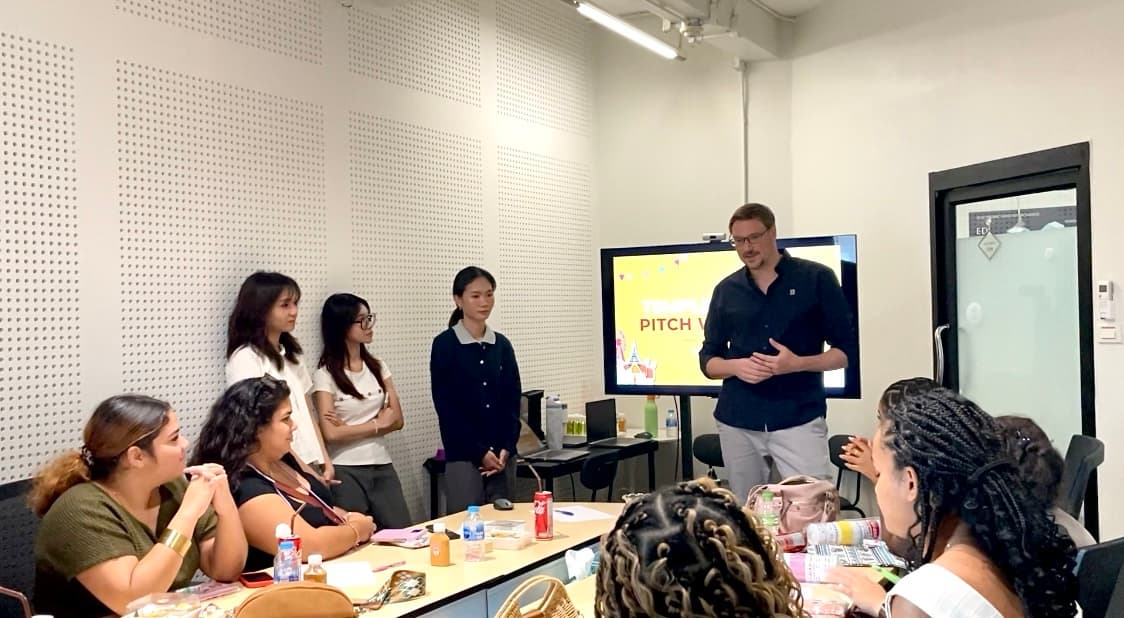
The half of the day they couldn't see
Before the group left, Alexis said something that meant more to us than he probably knew:
“We were really well welcomed. When we arrived here, we met your director, who had already discussed with us, back when we were in Réunion Island, how to prepare our visit. Everything you did was really interesting for us and for the students who came with us.”
What he was naming, without quite naming it, was the invisible half of the day. Every moment that felt effortless to them had been built to feel that way on purpose, a month in advance. Ease is never an accident. It's the result of someone, somewhere, doing the unseen work so that nobody else has to.
Anyone who has ever hosted anything knows this. The guests remember the warmth. Only the host remembers what it took.
What that unseen work looks like in a real operation: https://www.datasabai.com/en/resources/case-studies/Automotive
One lesson, every market
He left us with one more thought, almost in passing:
“Digital marketing is almost the same as it is for us. The only difference is the way you use it and the tools you have. While the tools are not always the same, the meaning and the objectives remain the same.”
He was comparing his island with our city. He had also, without meaning to, summarized the whole afternoon.
Every market is its own small world: its own words, its own habits, its own quiet loyalties and quiet fears. The tools change from place to place and from industry to industry. The layer underneath doesn't, because underneath every role and every title there is a person, deciding with feeling first.
This is why we keep saying that understanding the ecosystem is never a step you clear away before the real work begins. It is the work. It's also, in miniature, how we prefer to work with anyone who comes to us: we don't begin with what we offer. We begin with what the world looks like from where the other person is standing, what's pressing on them this quarter, what they've already tried that didn't hold, and what ease would even feel like from there. The most useful thing we can ever do is help someone see their own ecosystem that clearly: the feelings underneath their buyers' decisions, the belief that was there before the need was spoken, the distance between what is being said and what is actually being heard.
What crossed the ocean back
Nine students carried something home that was never on the syllabus. Not a technique, but a way of standing in front of a stranger: find what's already true for the person in front of you and build from there. They found it themselves, mid-pitch, which is the only way it ever really sticks.
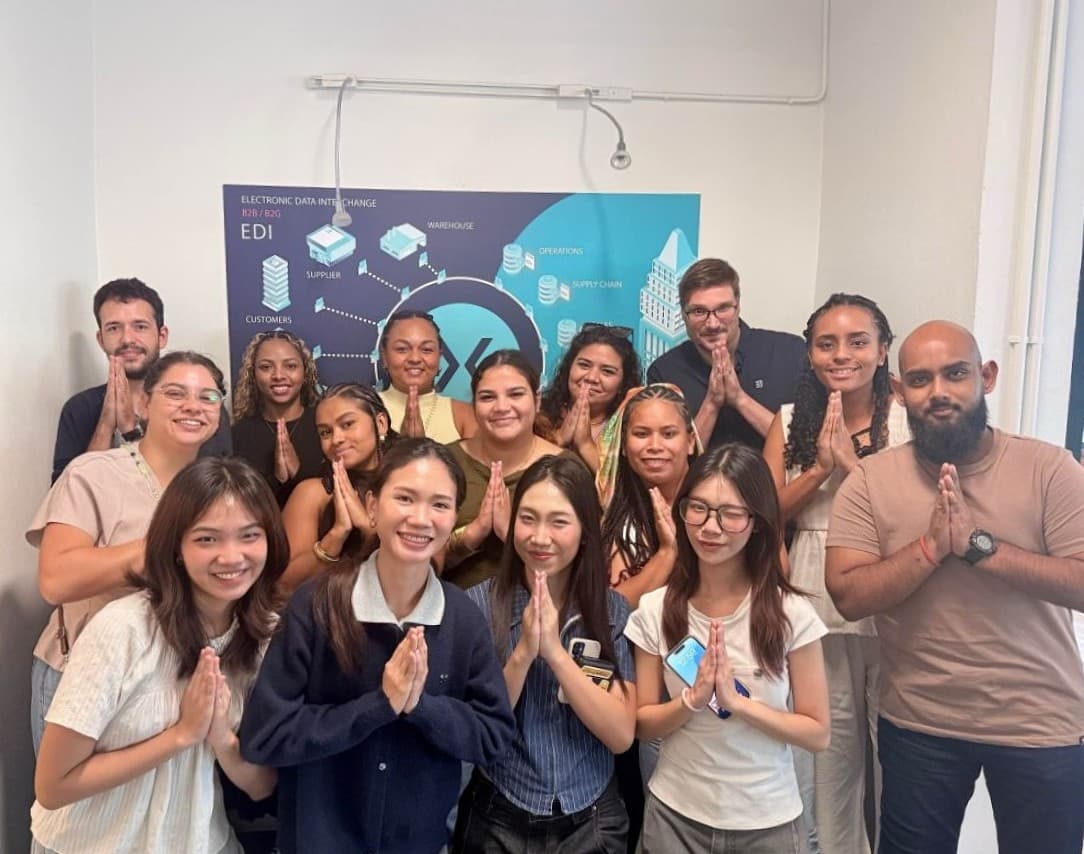
If a conversation about seeing your own ecosystem clearly would be useful to you, we're always happy to have it.
コミュニティに共有しましょう


B2B Integrationを、事業に成果を生む仕組みに変えましょう
成功に向けたパートナーシップを始めましょう。 私たちの専門チームが、お客様の戦略的な進化を支援します。